

Cell Development and Electrochemical Testing
Our facility is specially designed to allow for flexibility and rapid prototyping of new cell technologies. We utilize semi-manual processes that can be quickly retooled or redesigned to accommodate unforeseen challenges in a variety of development projects.

Solutions for Any Level of Advancement
Polaris has options for one-time projects, phased activities, and partnership structures including co-locating at Polaris’
facility and the dedication of lab capacity and experienced personnel.Proof of Concept
For early-stage companies; the results can prove theoretical material attributes match published results, and that a third party
can successfully duplicate the client's results. This is critical for securing funding internally or with external partners.Technology Advancement
For companies in the development stage; results from Polaris can advance the technology from material R&D to full cell design, build and characterization. Modeling and test results can be extremely valuable with OEM’s interested in specific performance attributes.
Scale Up
For companies scaling up their product; Polaris can facilitate large prototype and pre-production builds that can generate final
factory validation and thousands of cells for testing and customer application testing.Standard Polaris Cell Formats
Polaris has developed a variety of cell formats and capacities for in-house cell fabrication, each with a specific development niche in mind. Fabrication quantities can range from 10's to 100's in-house, or 1000's via our fabrication partners.
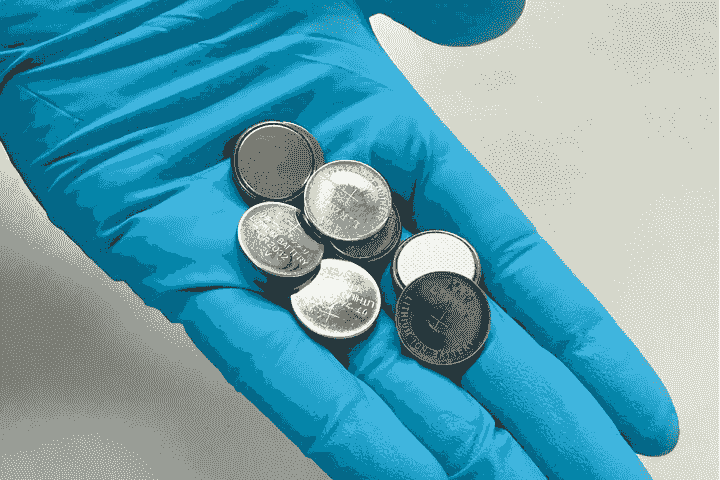
CR 2032 Coin Cell/Half Cell
Description:
Coin cells are one of the most widely used cell formats in battery development. They are easy to fabricate, low cost, and require very small quantities of electrode material per cell. Polaris utilizes these daily to assess new technologies quickly.
Half cells are coin cells with a solid chip of lithium (or sodium) in place of a coated anode. This eliminates variables with testing and allows near infinite supply of the active metal required.
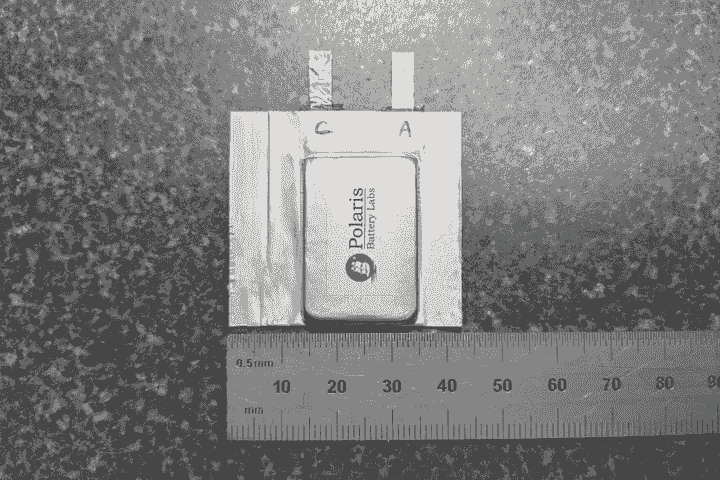
32224 Fun Size Pouch Cell
Approximate Capacity - 25 mAh
Maximum Cell Dimensions - L 31.5 x W 21.5 x H 3.75mm
Description:
While coin cells are very easy to fabricate in large quantities, they lack key capabilities that flexible pouch cells allow, including precise internal pressure control, degas capability, gas accumulation monitoring, Z-axis measurement capabilities, and quick cell autopsy.
Polaris developed the 32224 pouch cell format to allow for greater test detail while keeping costs and material demand low.
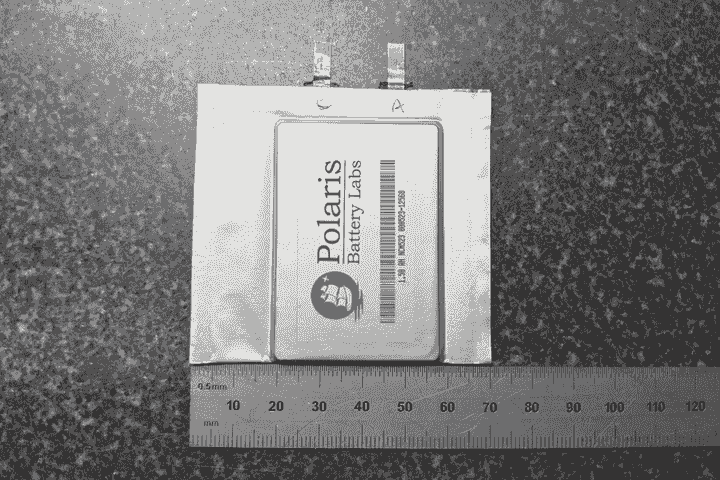
57404 Baseline Size Pouch Cell
Approximate Capacity - 1.5 Ah
Maximum Cell Dimensions - L 57.75 x W 40.75 x H 3.75mm
Description:
Available in a single layer or multi-layer stacked or wound electrode format, the Baseline size cell is the workhorse of our pouch cell line. The 57404 size allows for precision performance analysis, while offering a wide array of flexibility in application testing. Its small size is ideal for small batch fabrication and is ideal for environmental testing in confined spaces.
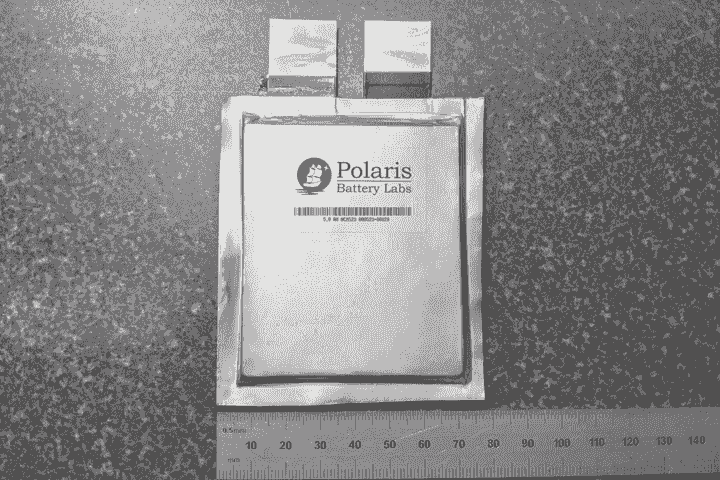
72647 Husky Size Pouch Cell
Approximate Capacity - 5 Ah
Maximum Cell Dimensions - L 72.5 x W 64 x H 7.5mm
Description:
The largest standard Polaris format, the Husky 72647 cell is designed to allow up to 5Ah cell capacity in a stacked electrode format. This larger size allows for faster and more accurate assembly and data collection for projects demanding a larger capacity cell. Additionally, the compact overall size is efficient for fabrication, environmental testing, and manual disassembly for analysis.


Our Mission
Polaris Battery Labs, LLC © 2026